Friday, April 16, 2010

Obama's asteroid goal


Landing a man on the moon was a towering achievement. Now the president has given NASA an even harder job, one with a certain Hollywood quality: sending astronauts to an asteroid, a giant speeding rock, just 15 years from now.

Space experts say such a voyage could take several months longer than a journey to the moon and entail far greater dangers.

"It is really the hardest thing we can do," NASA Administrator Charles Bolden said.

Going to an asteroid could provide vital training for an eventual mission to Mars. It might help unlock the secrets of how our solar system formed. And it could give mankind the know-how to do something that has been accomplished only in the movies by a few square-jawed, squinty-eyed heroes: saving the Earth from a collision with a killer asteroid.

"You could be saving humankind. That's worthy, isn't it?" said Bill Nye, TV's Science Guy and vice president of the Planetary Society.

President Barack Obama outlined NASA's new path during a visit to the Kennedy Space Center on Thursday.

"By 2025, we expect new spacecraft designed for long journeys to allow us to begin the first-ever crewed missions beyond the moon into deep space," he said. "We'll start by sending astronauts to an asteroid for the first time in history."

On the day the president announced the goal, a NASA task force of scientists, engineers and ex-astronauts was meeting in Boston to work on a plan to protect Earth from a cataclysmic collision with an asteroid or a comet.

NASA has tracked nearly 7,000 near-Earth objects that are bigger than several feet across. Of those, 1,111 are "potentially hazardous asteroids." Objects bigger than two-thirds of a mile are major killers and hit Earth every several hundred thousand years. Scientists believe it was a 6-mile-wide asteroid that wiped out the dinosaurs 65 million years ago.

Landing on an asteroid and giving it a well-timed nudge "would demonstrate once and for all that we're smarter than the dinosaurs and can avoid what they didn't," said White House science adviser John Holdren.

Experts don't have a particular asteroid in mind for the deep-space voyage, but there are a few dozen top candidates, most of which pass within about 5 million miles of Earth. That is 20 times more distant than the moon, which is about 239,000 miles from Earth on average.

Most of the top asteroid candidates are less than a quarter-mile across. The moon is about 2,160 miles in diameter.

Going to an asteroid could provide clues about the solar system's formation, because asteroids are essentially fossils from 4.6 billion years ago, when planets first formed, said Don Yeomans, manager of NASA's Near Earth Object program at the Jet Propulsion Lab.

And an asteroid mission would be a Mars training ground, given the distance and alien locale.

"If humans can't make it to near-Earth objects, they can't make it to Mars," said MIT astronautics professor Ed Crawley.

Also, asteroids contain such substances as hydrogen, carbon, iron and platinum, which could be used by astronauts to make fuel and equipment — skills that would also be necessary on a visit to Mars.

While Apollo 11 took eight days to go to the moon and back in 1969, a typical round-trip mission to a near-Earth asteroid would last about 200 days, Crawley said. That would demand new propulsion and life-support technology. And it would be riskier. Aborting a mission in an emergency would still leave people stuck in space for several weeks.

The space agency may need to develop special living quarters, radiation shields or other new technology to allow astronauts to live in deep space so long, said NASA chief technology officer Bobby Braun.

Even though an asteroid would be farther than the moon, the voyage would use less fuel and be cheaper because an asteroid has no gravity. The rocket that carries the astronauts home would not have to expend fuel to escape the asteroid's pull.

On the other hand, because of the lack of gravity, a spaceship could not safely land on an asteroid; it would bounce off the surface. Instead, it would have to hover next to the asteroid, and the astronauts would have to spacewalk down to the ground, Yeomans said.

Once there, they would need some combination of jet packs, spikes or nets to enable them to walk without skittering off the asteroid and floating away, he said.

"You would need some way to hold yourself down," Yeomans said. "You'd launch yourself into space every time you took a step."

Just being there could be extremely disorienting, said planetary scientist Tom Jones, co-chairman of the NASA task force on protecting Earth from dangerous objects. The rock would be so small that the sun would spin across the sky and the horizon would only be a few yards long. At 5 million miles away, the Earth would look like a mere BB in the sky.

"It's going to be a strange alien environment being on an asteroid," Jones said.

But Jones, a former astronaut, said that wouldn't stop astronauts from angling to be a part of such a mission: "You'll have plenty of people excited about exploring an ancient and alien world."


Tuesday, February 16, 2010


The most pertinent date this week for the White House is tomorrow, Feb. 17 -- first anniversary of the American Recovery and Reinvestment Act, which spread $862 billion in federal largesse around the nation. The administration is fanning out coast to coast all week to promote the spending, and the jobs that come with it.

Vice President Biden, fresh from the Olympics in Vancouver, will kick off the week's celebration today with a visit to economically depressed Saginaw, Michigan. Before the week is out, Cabinet members will be in Ohio, Georgia, Texas and Virginia. Obama wraps up the week with events in Colorado and Nevada.

Today, the president will tout the joys of job training at an electrical workers union headquarters in Lanham, Maryland. There he is expected to announce that the government will guarantee more than $8 billion in loans to build the first U.S. nuclear power plant in nearly three decades in Burke, Georgia, according to The Associated Press.

The rest of Obama's day is under wraps -- private meetings at the White House with his HUD, EPA and Defense chiefs. It's becoming more typical for the president to remain in private these days, says The Oval's chum and CBS Radio correspondent Mark Knoller: four days last week he was neither seen nor heard, a record for his presidency.

Whether in public or private, the president should be pleased today: a top Taliban commander has been captured by U.S. and Afghan forces.

On the other hand, Obama's policy of engagement with Iranappears to be disappearing, and Secretary of State Hillary Clinton says that nation is taking on the feel of a military dictatorship.

That's not the feeling here in Washington, where the federal government, fresh from a snow week and Presidents' Day, will brave the Capital's still snow-infested roads and head back to work -- late.

And so we leave you, at least until later this morning, with White House counselor Valerie Jarrett's last Olympics post on the White House blog -- a paean to patriotism. Be safe out there on Fat Tuesday!

Wednesday, February 10, 2010

toyota' reall struggles


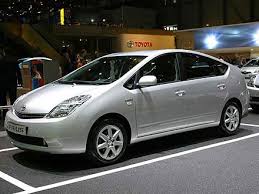
Toyota is facing a deepening image crises as it continues weekly to expand its recall of cars for problems that include sliding floor mats, sticky pedal and software glitches in brakes.

The latest move came Tuesday when Toyota recalled more than 400,000 of its Prius and other hybrid models over braking problems. The company also recalled more than 7,300 late-model Camrys in the U.S. for a separate braking issue.

Mr. Carter had no comment on a possible Corolla recall amid steering complaints from owners of that model and said the company is studying the issue.

"We are working very closely with the National Highway Traffic Safety Administration and we have a good relationship with them," Mr. Carter said when asked whether there could be more recalls. "We are working through these situations one at a time."

The executive admitted Toyota had considered canceling the press conference, which overshadowed the global launch of its new Avalon sedan. Indeed, the vehicle became an impromptu work surface for reporters covering his remarks.

Mr. Carter reiterated Toyota's stance that the pedal problems weren't linked to external electrical interference and the steps the company has taken should solve sudden-acceleration concerns.

"There is nothing that we can find that even comes close to indicating our electronic controls would be causing unintended acceleration," Mr. Carter said. "We had discovered some mechanical issues; one was the floor mat and the other was the sticky pedal. But we are confident in the fix we have found for the pedal."

Production of all Toyota vehicles has resumed in the U.S. with new vehicles beginning to arrive at showrooms, the company said.

Meanwhile in Washington, U.S. Rep. Darrell Issa (R., Calif.) said he wants Mr. Toyoda, grandson of Toyota's founder, to testify. He also wants to arrange a meeting with Mr. Toyoda and congressional leaders of both parties to go over issues surrounding Toyota's troubles.

Mr. Issa is the top Republican on the House Oversight and Government Reform Committee, which has scheduled a hearing for Feb. 24 on Toyota's recalls.

"Given the number of outstanding questions surrounding Toyota's relationship with U.S. regulators and in the best interests of moving forward, I'd like to help facilitate a dialogue between Mr. Toyoda and lawmakers from both parties and both chambers," Mr. Issa said.

"I would think that Mr. Toyoda would be receptive to the opportunity to meet with policymakers and there certainly is widespread interest from Capitol Hill and the American people to hear directly from him," the lawmaker said.

Mr. Issa said he asked his committee's chairman, Rep. Edolphus Towns (D., N.Y.), to formally invite Toyoda to the hearing.

A spokeswoman for Mr. Towns said the committee chairman "looks forward to receiving Rep. Issa's letter and to discussing his request." Martha Voss, a Toyota spokeswoman, said Mr. Toyoda "would look forward" to meeting with members of Congress but that, for now, the plan is for Yoshimi Inaba, head of Toyota's North American operations, to testify.

Sunday, January 17, 2010


Obama has mobilized a huge emergency aid effort for Haiti and officials say the United States will remain involved in rebuilding the impoverished Caribbean nation so that, after some 200 years of independence, it can eventually stand on its own.

"I want the people of Haiti to know that we will do what it takes to save lives and to help them get back on their feet," Obama said on Friday. "The scale of the devastation is extraordinary ... and the losses are heartbreaking."

This is what could happen next.

THE U.S. EFFECTIVELY TAKES OVER

U.S. officials have stressed that the assistance effort, which involves thousands of U.S. soldiers, sailors and Marines along with civilian search-and-rescue teams, is being organized in cooperation with the Haitian government led by President Rene Preval.

But the Haitian government, fragile at the best of times, is almost entirely out of contact, meaning that many of the operational decisions must come from Washington.

Experts say the United States has few options: it must either step up to the task of relief rebuilding, or open itself to criticism and as a possible new flood of Haitian refugees.

Dan Erikson, a Haiti specialist at the Inter-American Dialogue, a Washington-based think tank, said at least in the short term the United States was calling the shots.

"Haiti had barely functioning ministries even before the earthquake," Erikson said. "The Obama administration can describe this as a partnership, but it is one where one partner is doing all the work and has all the authority."

U.S. aid chief Rajiv Shah said the strategy was to "saturate" assistance networks run by the United Nations and non-governmental organizations -- after which U.S. forces will start delivering emergency help themselves.

It will not be the first time U.S. soldiers have taken the lead in Haiti, the hemisphere's poorest country. After decades of political turbulence, the United States first sent troops to Haiti in 1915. They stayed 19 years.

More recently, former President Bill Clinton helped restore President Jean-Bertrand Aristide after he was ousted by the military in 1991. But President George W. Bush did little to help Aristide stay in office when his second term was cut short in 2004 by an armed revolt.

Aristide, speaking from exile in South Africa, has offered to return -- which could complicate things.

"What happens if the Venezuelans decide to fly him back?" said Larry Birns, director of the Council on Hemispheric Affairs. "Until there is some kind of political resolution, it is going to be very hard to have rehabilitation."

UNITED NATIONS TAKES THE LEAD

U.S. officials sketch out a long-term strategy under which the United Nations -- which already has a peacekeeping force of about 9,000 in the country -- takes the lead.

While U.S. forces will contribute much of the initial emergency earthquake response, over time this will shift to a broad-based international assistance project that will concentrate on areas such as energy, farming and healthcare.

"Before this earthquake, we weren't talking about restoring (Haiti) we were talking about building a whole new country, former President Clinton said on U.S. television on Sunday.

"And there was a government plan that they developed in cooperation with the U.N., but it was their plan. And what I believe will happen is they will take all this devastation into account, all the work that has to be done, and they will rewrite their plan."

Coordination could be simple. Bill Clinton is already the U.N. special envoy for Haiti, and repeated donor conferences have established a well-known set of development priorities as well as a mechanism -- the Interim Cooperation Framework -- for delivering the help.

U.N. and NGO offices in Haiti are themselves struggling with the quake's aftermath. But given time, analysts say they should be well positioned to help channel assistance.

THE HELP DRIES UP

Some analysts say perhaps the biggest fear is that time will push Haiti off the priority list as other disasters intervene. For Haiti, already among the world's least developed nations, this could be a compound catastrophe.

"Donor fatigue is a very real concept," Birns said.

With a population of 9 million, an annual per capita income of just $560 and high infant mortality and HIV/AIDS rates, Haiti needs help virtually across the board but often lacks the ability to handle it when it comes.

"Often a lot more money is pledged than is actually delivered. And once the money is delivered, the Haitian government doesn't have the capacity to execute so the money doesn't get spent," said Erikson.

Still, like many development experts, he saw the earthquake as a possible fresh start for Haiti in its relations with its powerful northern neighbor -- who this time is intervening for humanitarian, rather than political, reasons.

"I think we ought to care from a humanitarian perspective and I also think from a strategic perspective because it makes sense to have a stable democracy in our neighborhood," former President George Bush said in a U.S. television interview.